
 EN
EN
 ar
ar bg
bg hr
hr cs
cs da
da nl
nl fi
fi fr
fr de
de el
el hi
hi it
it ko
ko no
no pl
pl pt
pt ro
ro ru
ru es
es sv
sv tl
tl iw
iw id
id lv
lv lt
lt sr
sr sk
sk sl
sl uk
uk vi
vi et
et hu
hu th
th tr
tr fa
fa ms
ms hy
hy ka
ka ur
ur bn
bn mn
mn ta
ta kk
kk uz
uz ku
ku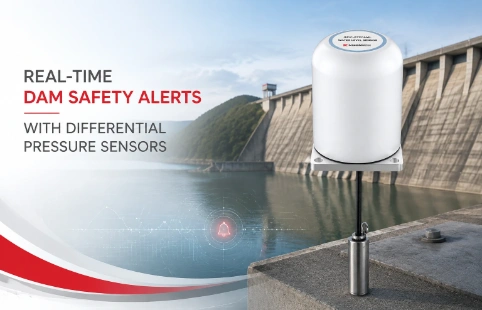
Real-Time Dam Safety Alerts with Differential Pressure Water Level Sensors
Key Takeaways An alert chain needs more than a sensor: define field in...

Wireless Data Collection Systems for Your Sensors
Running cables through a landslide-prone slope or a dam foundation isn’t just messy—it’s a risk that can compromise both data quality and safety. That’s why more geotechnical engineers are cutting the cord with wireless data collection systems. These setups replace physical wiring with radio signals, letting you gather readings from sensors scattered across a site without trenching, conduits, or endless troubleshooting. Kingmach, as a manufacturer with two decades in geotechnical instrumentation, designs wireless data collection systems that feed clean, synchronized data into your logging platform. The focus isn’t on flashy extras but on making sure the numbers you get from piezometers, inclinometers, or load cells stay accurate, no matter the weather or terrain. With industrial-grade housings and low-power radios that keep running on batteries for months, you can deploy in remote locations and still pull data on schedule. Plus, every installation can be tailored—our engineers adapt channel counts, sampling intervals, and communication protocols to match the job, not the other way around.
Technical Detail
A wireless data collection system from Kingmach typically breaks down into three pieces: a field node that sits next to your sensors, a gateway that receives data and pushes it to the cloud or a local server, and the software that lets you view trends or set alerts. The nodes accept inputs from vibrating wire, 4-20 mA, Modbus, and SDI-12 sensors, so you’re not locked into a single type of instrument. That means you can pull data from a crack meter installed last year right next to a new piezometer, without adding extra translators or boxes. Sampling rates are adjustable from once every few hours down to once per second, and each node stores several thousand data points locally in case the radio link drops. On the radio side, the systems often use LoRa or 2.4 GHz mesh networks, depending on range and power needs. A LoRa link can cover a couple of kilometers in open terrain; a mesh network gives you redundancy—if one node goes offline, traffic routes through another. Gateways support Ethernet, Wi-Fi, and 4G backhaul, so you can send data to a supervisor’s phone or a central server from almost anywhere. Installation is straightforward: a node is roughly the size of a lunchbox, mounts on a pole or a wall, and gets power from a small solar panel or a D-cell battery pack. Field engineers who’ve used these on dam and tunnel jobs often comment on how much time they save not pulling cable through boreholes. Kingmach can pre-configure nodes in the factory, ship them ready to pair with your sensors, and provide remote support during the first weeks of data collection. If your project requires something non-standard—say, a specific data format or a Modbus register map—the engineering team can customize the firmware before shipping.
News
Key Takeaways An alert chain needs more than a sensor: define field in...
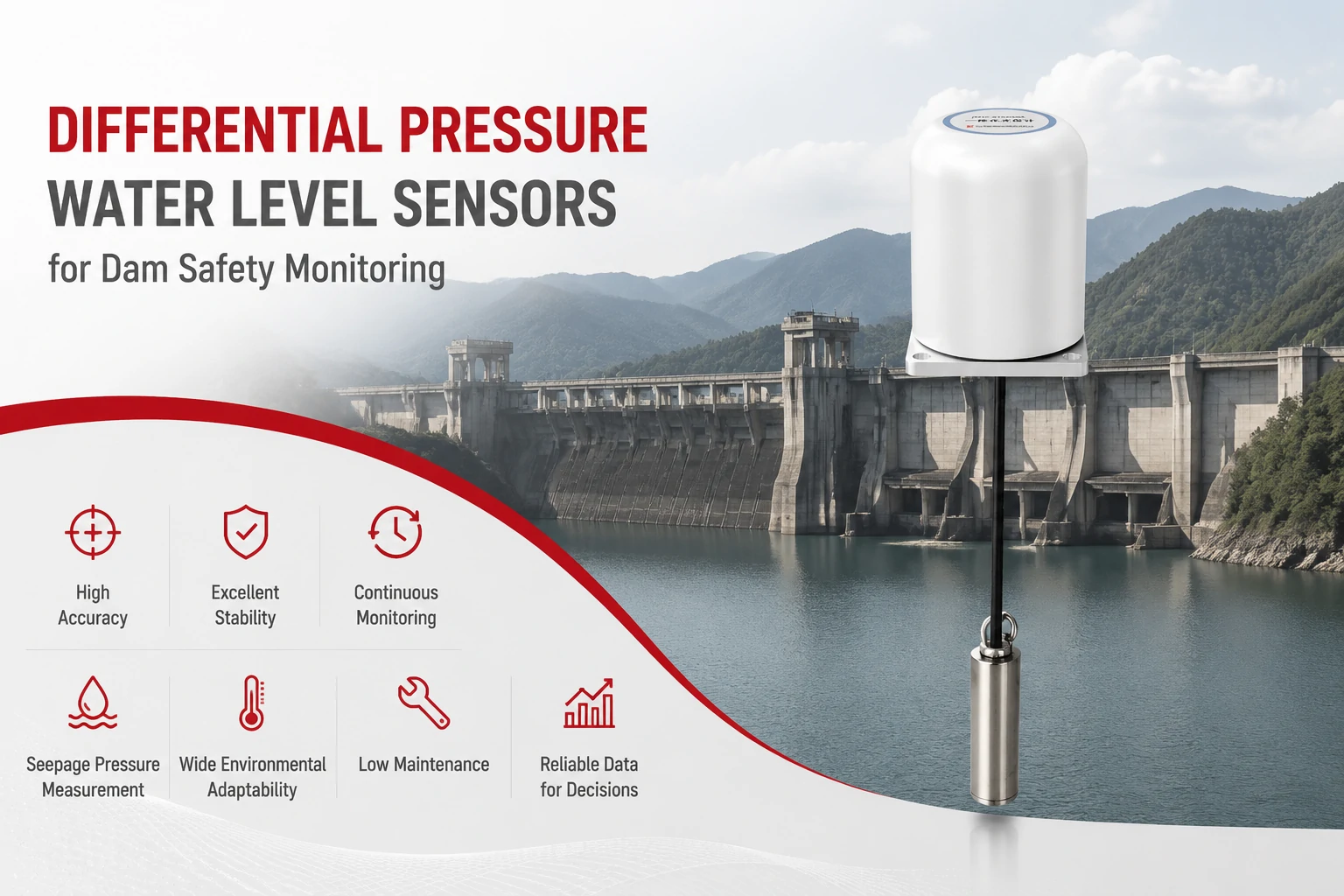
Key Takeaways The strongest fit is usually a confined, submerged, or s...
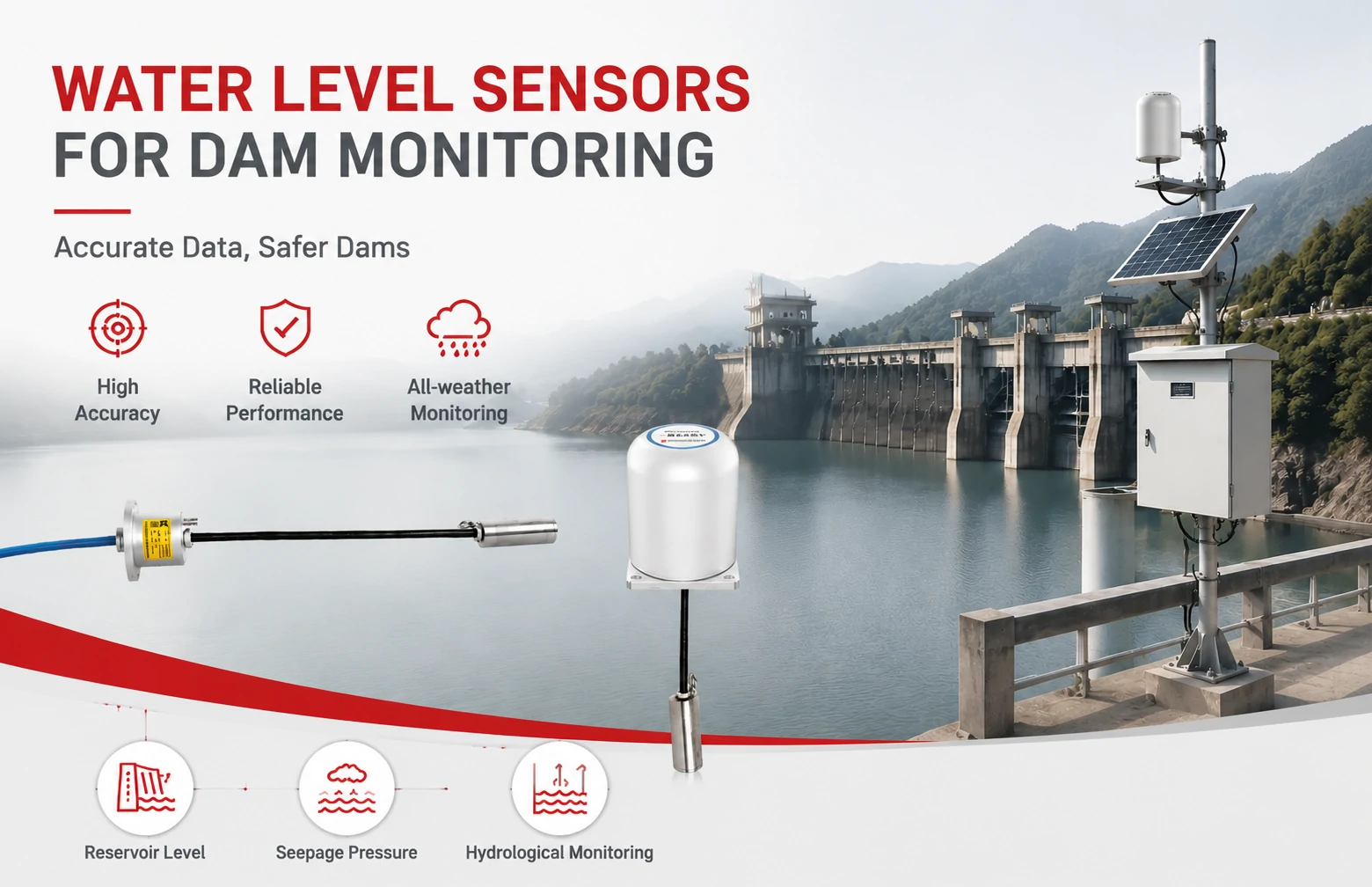
Kingmach Water Level Sensors for Dam Monitoring: A Buyer's Guide to Differential Pre...
Products
FAQ
Most systems use spread-spectrum modulation and frequency hopping to avoid interference. The node and gateway continuously scan channels and switch if noise rises. In our deployments, packet loss typically stays below 1% on a properly installed link.
Yes. Our nodes include multiple input channels that can be configured independently. A single node can read two vibrating wire sensors and one 4-20 mA transmitter simultaneously, which often reduces the number of units you need on site.
With hourly transmission on a 19 Ah battery pack and a good solar panel, field nodes often run 2-3 years without manual intervention. Actual life depends on sensor warm-up time and temperature, but we can provide a detailed power budget for your specific setup.
The gateway outputs data via MQTT, HTTP, or Modbus TCP, allowing integration with most SCADA and cloud platforms. Our team can provide protocol documentation and support to connect to your existing infrastructure.
Share your product type, target capacity, and application requirements. Our team can review the details and recommend a practical next step.
If you are interested in our products or want to become our partner.
Please leave your contact information, our team will contact you as soon as possible.
Mail: [email protected]
Contact Us: +8613808434127
Address: No. 188 Tongzipo West Rd, Changsha, Hunan, China