
 EN
EN
 ar
ar bg
bg hr
hr cs
cs da
da nl
nl fi
fi fr
fr de
de el
el hi
hi it
it ko
ko no
no pl
pl pt
pt ro
ro ru
ru es
es sv
sv tl
tl iw
iw id
id lv
lv lt
lt sr
sr sk
sk sl
sl uk
uk vi
vi et
et hu
hu th
th tr
tr fa
fa ms
ms hy
hy ka
ka ur
ur bn
bn mn
mn ta
ta kk
kk uz
uz ku
ku
weir flow meter
Kingmach weir flow meter turns a small water level change into a usable flow trend. Many water projects do not need only a single discharge value; they need to know whether flow is rising, falling, delayed after rainfall, reduced after sediment build-up, or affected by upstream operation. The weir point gives a control section, while the water head record gives the time-based signal. Engineers can then compare flow with rainfall, gate operation, pump status, drainage reports, seepage observation, or field inspection. This makes the record useful for operation and diagnosis. A flow increase during rain may be expected, but a flow increase during dry conditions may need attention. A slow decline may point to blockage or changed channel conditions. The product information can make these review paths clear without presenting the meter as a standalone device. The field record should explain the water path, the condition before the reading changed, the inspection access, and whether nearby operations or weather events affected the channel. This keeps the flow curve connected to real site behavior rather than leaving it as an isolated number. A practical review also checks whether the measuring section remained clean and hydraulically stable. Sediment, debris, vegetation, downstream backwater, or a disturbed approach can change the meaning of the same water-head reading, so those conditions belong in the project notes.
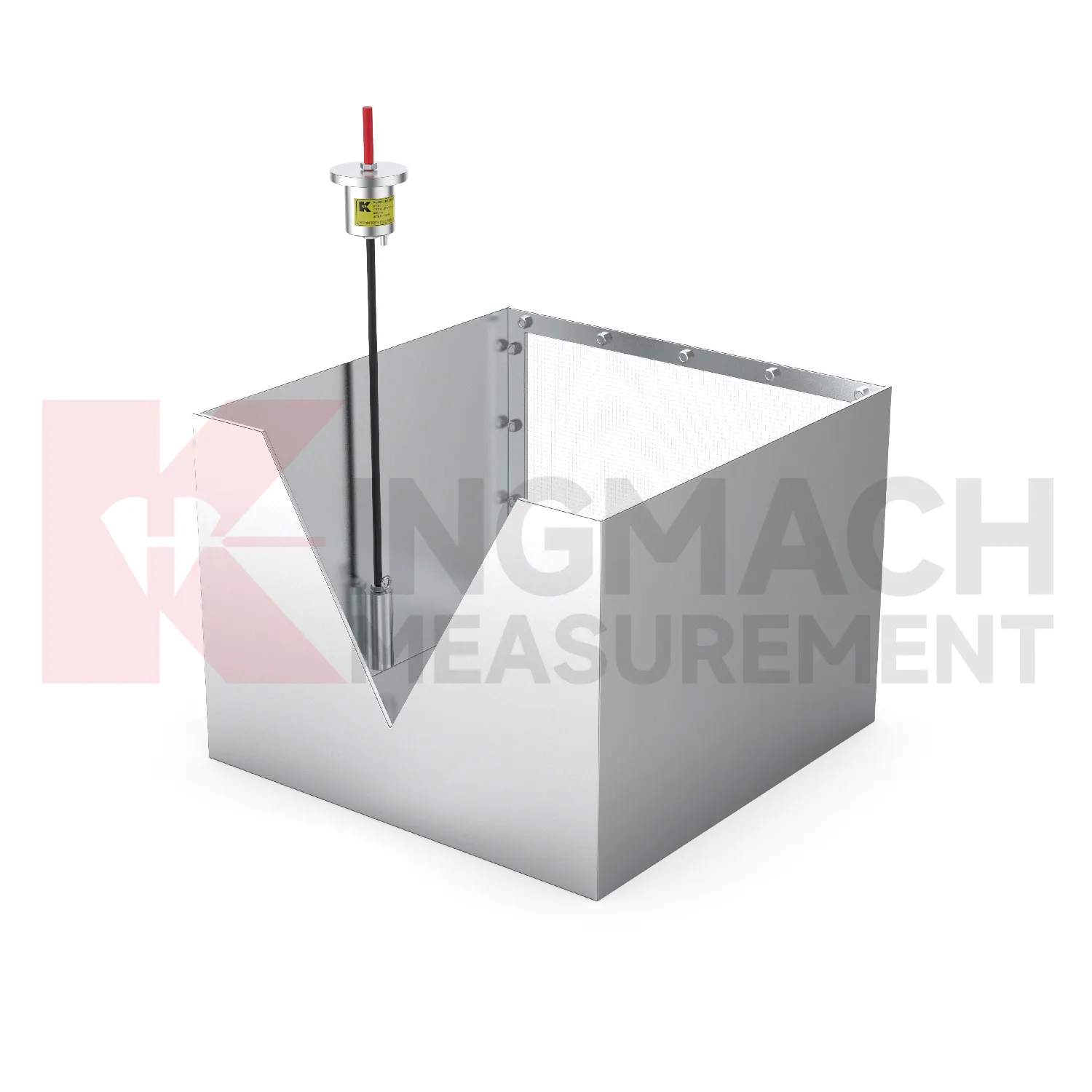
Application of weir flow meter
Water supply and treatment facilities can use Kingmach weir flow meter to monitor flow through open channels, process by-pass points, or controlled discharge sections. The goal may be operating balance, inflow observation, outflow checking, or maintenance verification. The record becomes useful when it is tied to pump status, valve or gate operation, cleaning schedules, rainfall, and process events. A flow point should be placed where the water condition is stable enough to represent the channel. If foam, sediment, turbulence, or downstream water affects the control section, the data should be reviewed carefully. Good flow monitoring helps operators compare actual water movement with the expected operating state and quickly notice conditions that need field checking. In treatment work, timing matters because process changes, cleaning cycles, storm inflow, and maintenance by-pass events can all alter channel behavior. A dated record helps staff explain why flow changed and whether the change matched plant activity. It can also support handover between shifts, because the next operator sees not only the curve but the event that shaped it. That makes routine review more disciplined and less dependent on verbal memory. It also helps maintenance staff plan cleaning before reduced conveyance affects routine operation. across different work shifts.
The future of weir flow meter
Future Kingmach weir flow meter will support better water resource management by turning small-channel measurements into comparable long-term records. Owners can compare seasonal flow, storm response, maintenance effects, and dry-period behavior across multiple sites. That comparison is only useful if each point is installed and maintained consistently. Future reports should show not only the flow value but also the site condition that shaped it. A flow record from a clean channel should not be compared blindly with one affected by sediment or vegetation. Better context will make water allocation, drainage planning, and maintenance budgeting more defensible. Multi-site review will matter more as projects connect canals, drains, reservoirs, pumping stations, and industrial discharge points into one operating view. The strongest records will keep location history, cleaning events, rainfall context, and channel changes visible beside the trend. That context lets managers compare stations fairly instead of treating every difference as a measurement problem. Clearly.
Care & Maintenance of weir flow meter
Water head measurement for Kingmach weir flow meter needs a stable reference. If the head location is disturbed by turbulence, air bubbles, sediment, trapped debris, or local backwater, the calculated flow behavior may no longer represent the channel. Inspect the sensing area and confirm that the water surface is calm enough for the intended measurement. The reference point should be documented in drawings and photographs. If maintenance changes the weir, channel wall, or sensing position, the record should say so. A stable reference protects long-term comparability, especially when operators compare present flow with past events. Maintenance staff should avoid moving brackets, tubes, labels, or reference marks without updating the file. Even a small field change can confuse later review if it is not recorded. After any adjustment, the first stable reading should be saved with a note about site condition, weather, and visible channel behavior. This keeps future flow interpretation tied to a known physical point.
Kingmach weir flow meter
Kingmach weir flow meter should be specified around the flow question at the site. A small seepage channel, a drainage outlet, a hydraulic test section, and an irrigation branch may all need different installation details even when the measurement principle is similar. The buyer should define what liquid is being measured, how the channel is shaped, whether water can back up, where sediment may collect, and how the flow record will be used. A good monitoring point is not only a meter; it is a weir body, a stable water head reading, a clean approach condition, and a data record that can be trusted during changing site conditions. Starting from the field question keeps the page practical and avoids product-list writing. A practical review also checks whether the measuring section remained clean and hydraulically stable. Sediment, debris, vegetation, downstream backwater, or a disturbed approach can change the meaning of the same water-head reading, so those conditions belong in the project notes.
FAQ
Q: How does Kingmach weir flow meter help drainage projects?
A: It shows how discharge changes during routine operation, storms, dewatering, blockage, cleaning, or downstream backwater.
Q: How does it help irrigation projects?
A: It helps compare delivery timing, flow distribution, channel condition, rainfall effect, and water-use management across operating periods.
Q: How does it help tunnels?
A: It can track drainage or seepage-related flow and compare changes with rainfall, groundwater, maintenance cleaning, or underground construction activity.
Q: How does it help dam or slope drainage?
A: It provides a flow record that can be reviewed with seepage, rainfall, pore pressure, settlement, displacement, and inspection notes.
Q: How does it fit into a platform?
A: It works as the flow layer beside rainfall, water level, seepage, environmental, and structural monitoring records. A weir point also needs safe routine access. If staff cannot reach the crest, enclosure, or sensing area during wet weather, the project may collect data but struggle to maintain confidence in it when the record is most important.
Reviews
Christopher Martinez
Very satisfied with the readouts & data loggers. User-friendly interface and supports multiple sensor inputs.
Joshua Clark
We ordered a full monitoring solution including sensors and data loggers. Everything works seamlessly together. Great supplier!
Latest Inquiries
To protect the privacy of our buyers, only public service email domains like Gmail, Yahoo, and MSN will be displayed. Additionally, only a limited portion of the inquiry content will be shown.
Evelyn***@gmail.comSouth Africa
Hi, we are a contractor working on tunnel construction and need settlement sensors and displacement ...
Ava***@gmail.comAustralia
Hi, I am looking for reliable tiltmeters and accelerometers for structural health monitoring. Please...
Related product categories
- Intelligent Weir Flow Meter
- Smart Weir Flow Meter
- weir flow meter
- weir type flow meter
- weir flow meter Price
- weir flow meter Manufacturer
- weir flow meter Supplier
- weir flow meter Solution
- weir flow meter System Integration
- weir flow meter Localization
- weir flow meter Domestic Manufacturing
- weir flow meter China